ER Bill Too High? Here's Exactly What to Do (2026 Complete Guide)
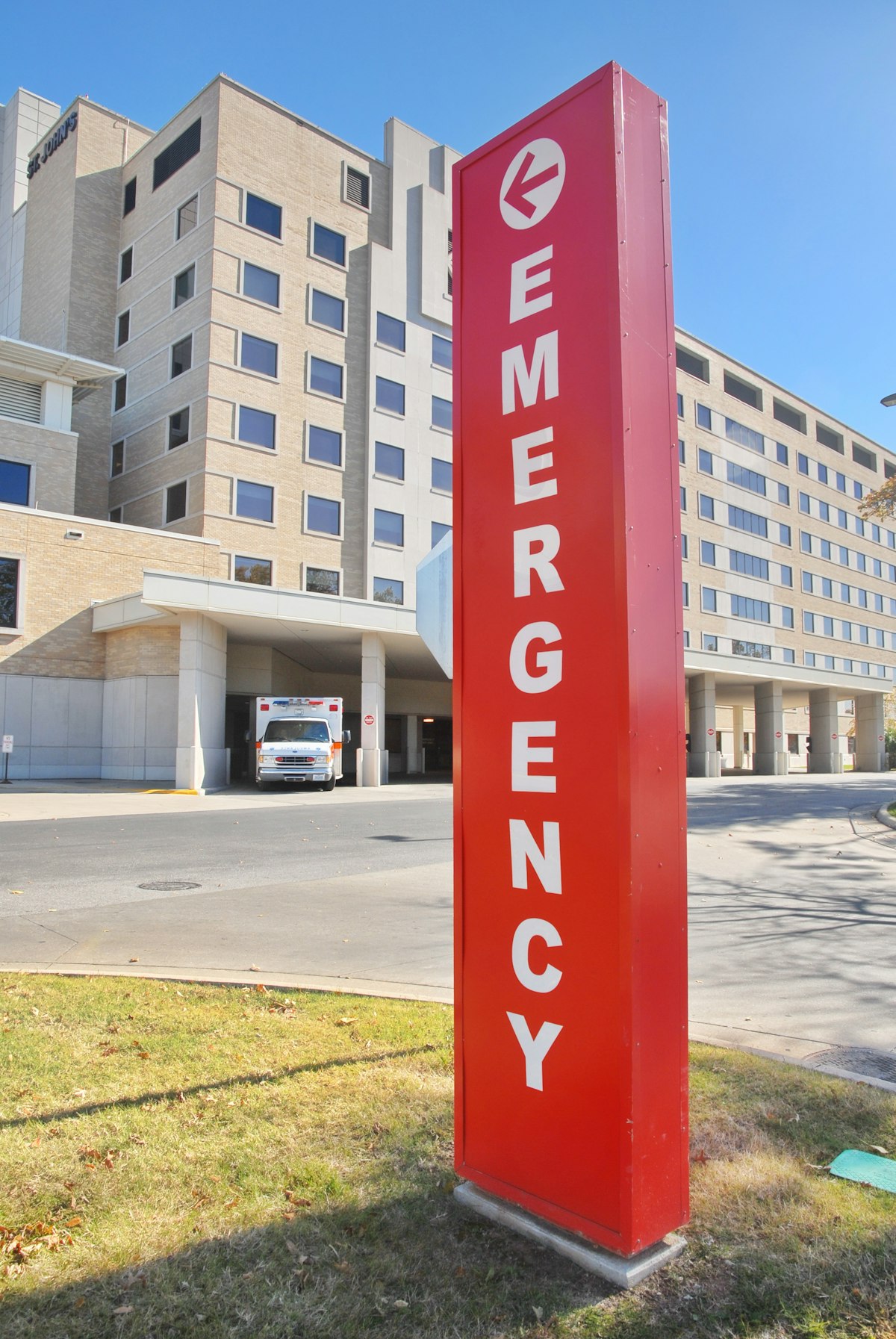
ER Bill Too High? Here's Exactly What to Do (2026 Complete Guide)
Last Updated: February 20, 2026 | Reading Time: 12 minutes
Quick Answer (TL;DR)
Yes, your ER bill is probably too high—and yes, you can lower it.
- Average ER cost: $1,500-$3,000 (without insurance)
- 80% of ER bills contain errors that cost you money
- Most common overcharges: Facility fees, duplicate charges, upcoding
- You can negotiate 30-70% reductions if you know what to do
- Time matters: Act within 30 days for best results
Already drowning in bills? Get instant AI analysis → https://www.billreliefai.com/get-started
Why Your ER Bill Feels Like Highway Robbery (It Kind Of Is)
You went to the emergency room with chest pain. Two hours and a few tests later, you're told it's acid reflux. Relief washes over you—until the $8,000 bill arrives.
Sound familiar? You're not alone.
Here's the shocking reality:
- An ER visit costs $1,500 to $3,000 on average without insurance, with most people spending about $2,100 for an urgent, non-life-threatening health issue
- In total, enrollees and insurers paid $2,453, on average, per visit, with one quarter of visits costing $970 or less and another quarter costing $3,043 or more
- With insurance, you still pay $100-$500 copay PLUS any unmet deductible
- One hospital charged $76 for Bacitracin antibacterial ointment. One woman who fell and cut her ear and was given an ice pack but no other treatment was billed $5,751
The worst part? You didn't choose to go to the ER during an emergency. You can't "shop around" when you're in pain or scared.

The Real Reason ER Bills Are So Expensive
Let's pull back the curtain on what you're actually paying for.
1. The Facility Fee (The Biggest Line Item)
This is a charge that hospitals make for just keeping their doors open, keeping the lights on, the cost of running an emergency room 24/7
Real example: A Band-Aid placed on a finger resulted in a $629 bill. The Band-Aid only cost $7. The other $622 were the hospital's facility fees for just walking in the door and seeking service
Facility Fee Breakdown:
Your Bill Shows What It Actually Means "ER Level 1" Least urgent (cold, minor cut) "ER Level 2" Could become serious "ER Level 3" Moderate issue (broken bone) "ER Level 4" Most common - Multiple tests needed "ER Level 5" Life-threatening emergency Critical fact: Your ER visit costs are based on the symptoms you first describe upon entering the hospital, not your eventual diagnosis
This means: Chest pain = expensive testing, even if it's just heartburn.
2. Two Separate Bills (Yes, Really)
You'll receive:
- Hospital/Facility Bill - The ER itself
- Professional/Physician Bill - The doctor who saw you
Patients are usually surprised when their first ER hospital bill is quickly followed by a separate hospital bill with similar-sounding charges but different amounts. This is normal
Sometimes you'll get even more bills:
- Radiologist (read your X-ray)
- Lab company (processed your blood test)
- Anesthesiologist (if you had a procedure)
3. Out-of-Network Surprise Bills
Before 2022: You could get ambushed with out-of-network charges even at an in-network hospital.
Good news in 2026: The No Surprises Act, effective January 1, 2022, protects insured individuals from unreasonably high medical bills for emergency services received from out-of-network providers at in-network facilities
But it doesn't stop hospitals from charging you other excessive fees.

Real ER Bills: What People Actually Paid
Case Study 1: The $12,000 Bee Sting
Sylvia Rosas was seen by several doctors, who ordered thousands of dollars in blood tests and an EKG during the 2015 visit that lasted less than two hours. Since the hospital was out of network, her insurer wouldn't cover the visit, and she ended up having to pay the entire $12,000 bill
What should have happened: Pre-No Surprises Act. In 2026, this would be billed at in-network rates.
Case Study 2: The $8,000 Ankle Fracture
Rick Brown went to the ER where he had an X-ray and was seen by a physician assistant. The 58-year-old was given a splint, a prescription for painkillers and a recommendation that he follow up with a specialist. A few weeks later, the bills started coming in -- including a $2,600 for the ER and $5,700 from a physicians' office
Case Study 3: $28,000 for Chest Pain (Acid Reflux)
After a two-day stay for chest pain that turned out to be acid reflux, David received a $28,000 bill. He requested an itemized breakdown and found:
- $1,200 for a chest X-ray he never received
- $340 for a medication he was allergic to and couldn't have taken
- Total overcharges: $4,800
(Source: MyCareClaim case study)
How to Tell If Your ER Bill Is Too High (Spoiler: It Probably Is)
Red Flags Your Bill Is Inflated:
✅ The bill is higher than your deductible - You should only pay up to your deductible ✅ "ER Level 4 or 5" for a minor issue - Most visits should be Level 2-3 ✅ Round numbers - $500 for "supplies" is suspiciously vague ✅ Duplicate charges - Same test listed twice ✅ Services you don't remember - Were you really there for 4 hours? ✅ Charges after discharge - Nothing should be billed after you left ✅ Higher than Medicare rates - More than 3x Medicare = overpriced
Quick Math Check:
Use this formula from Medicare:
Fair ER Visit = $200-$800 (facility) + $100-$300 (doctor) + tests
Example:
- ER Level 3: ~$400
- Doctor: ~$200
- Blood test: ~$50
- X-ray: ~$100
- Total fair price: ~$750
If you paid $2,500? You were overcharged by $1,750+

Step-by-Step: How to Lower Your ER Bill (Do This Today)
Step 1: Don't Pay Immediately (Within 30 Days)
Most important rule: Do not pay the first bill you receive.
Why? Folks who fight medical bills for a living say 80 percent of the bills they see have errors in them
What to do instead:
- Mark your calendar: Bill date + 30 days
- Send this email to the billing department:
Subject: Request for Itemized Bill - Account #[YOUR NUMBER]
I am requesting a complete itemized bill with CPT/HCPCS codes for my ER visit on [DATE].
Under the Affordable Care Act and HIPAA, I am legally entitled to receive this within 30 days.
Please send to: [Your Email]
Account Number: [From your bill]
Thank you,
[Your Name]
Why itemized bills matter: Many hospitals don't send your itemized bill unless you ask for it. A consolidated summary is the bill you probably got in the mail, and contains an overview of your procedures, charges and your total balance owed
Step 2: Get Your Itemized Bill (Within 48 Hours)
Call the number for the hospital's billing department, typically located on the consolidated bill sent in the mail. When a human picks up, ask: "I'd like an itemized statement. Could you post it to my online portal or mail me a copy directly?"
Pro script:
"Hi, I'd like an itemized bill including all CPT codes for account #[NUMBER]. Can you email me that today or post it to my patient portal?"
If they resist: "Under the No Surprises Act and HIPAA Privacy Rule, you're legally required to provide this within 30 days. I need it to verify charges before payment."
Step 3: Review Your Itemized Bill for Errors
When analyzing a patient's ER visit costs for errors, Fries says she goes straight to one place first: Hydration services. Coding guidelines require that the two CPT codes for this service, 96360 and 96361, meet a minimum time requirement of 31 minutes in order for one unit to be billed
Common ER billing errors to look for:
1. Duplicate Charges
- Same lab test listed twice
- Two "ER facility fees"
- Multiple charges for same time period
2. Upcoding (Billing Higher Level Than Justified)
Most ER visits fall under level 4, which usually involves multiple diagnostic tests, such as blood work and X-rays
If you had:
- Minor cut + bandage = Should be Level 1-2, not 4-5
- Sprained ankle + X-ray = Should be Level 2-3, not 4-5
3. Services You Never Received
Check your memory and any discharge paperwork:
- Did you really get an MRI? CT scan? Ultrasound?
- Were you actually given IV fluids?
- Did a specialist consult you?
4. Incorrect Quantities
- "Acetaminophen 500mg - Qty: 12" when you took 2 pills
- "Bandages - Qty: 10" when one was used
5. Phantom Time
- Bill says 6 hours, but you were there 2 hours
- Charges after you were discharged
Step 4: Compare Against Medicare Rates
Medicare publishes what they pay for everything. Your bill shouldn't be more than 3x Medicare rates.
How to check:
- Find CPT code on your bill (example: 99284)
- Google: "Medicare CPT 99284 payment"
- Multiply by 3
- If your bill is higher → OVERCHARGED
Example:
- Your bill: "ER Level 4 (99284) - $1,500"
- Medicare pays: ~$200
- Fair price: $200 x 3 = $600
- You were overcharged: $900
Step 5: Negotiate (Most Powerful Step)
Script that works:
"Hi, I've reviewed my itemized bill for [DATE] and found several issues:
- [Specific error - e.g., "Charged for ER Level 5 but my issue wasn't life-threatening"]
- [Another error - e.g., "CT scan I didn't receive"]
- [Cost issue - e.g., "Your charge is 5x Medicare rates"]
I'm requesting a corrected bill. What's the process for disputing these charges?"
If they say no:
"I'm prepared to:
- File a complaint with [State] Department of Insurance
- Dispute this with my insurance company
- Request your chargemaster pricing list
- Seek legal counsel if needed
Can I speak with your supervisor?"
Success rates:
- Billing errors disputed: 70-80% success
- Overcharges negotiated: 40-60% reduction
- Time investment: 2-4 hours total

What If You Can't Pay Even After Negotiating?
Option 1: Payment Plan (Zero Interest)
The Emergency Medical Treatment & Labor Act (EMTALA) requires emergency departments to screen and stabilize anyone who needs care, regardless of their ability to pay
This means: They MUST offer payment plans.
What to ask for:
- 12-24 month plan
- Zero interest
- Monthly payment under 5% of your income
Script:
"I can afford $[realistic amount] per month. Can we set up a 24-month payment plan at 0% interest?"
Reality check: If they refuse, go to Option 2.
Option 2: Hospital Financial Assistance (Charity Care)
You might qualify even with insurance. Many people don't know this exists.
On average in 2025, households under 204% of the Federal Poverty Level will qualify for free care, and families under 322% will qualify for discounted care
2026 Income Limits for Free Care:
Family Size 200% FPL (Free Care) 400% FPL (Discounted) 1 person $31,200 $62,400 2 people $42,400 $84,800 3 people $53,600 $107,200 4 people $64,800 $129,600 (Add $11,200 for each additional person)
How to apply:
- Call hospital billing: "I'd like to apply for financial assistance"
- Request the charity care application
- Gather proof of income (paystubs, tax return)
- Submit within 240 days of your first bill
Read our complete charity care guide →
Option 3: Hardship Reduction
Even if you don't qualify for charity care, if your medical bills exceed 20-30% of your annual income, many hospitals will reduce your balance.
Example:
- Income: $50,000/year
- Medical bills: $15,000 (30% of income)
- Hospital writes off: $10,000
- You pay: $5,000 (on payment plan)
When to Get Professional Help
Sometimes DIY negotiation isn't enough. Consider professional help if:
✅ Your bill is over $5,000 - ROI justifies the fee ✅ You've tried negotiating and hit a wall - Pros have more leverage ✅ The bill is in collections - Harder to negotiate yourself ✅ You have multiple bills - Bundling saves time ✅ You're overwhelmed or stressed - Your health matters more
What BillReliefAI Does Differently
Unlike other services that take weeks or months:
- AI analysis in 48 hours - Not 4+ weeks
- Transparent pricing - No hidden fees
- 93% success rate - We find savings or you pay nothing
- Average savings: $4,200 - Typically 30-70% off your bill
Pricing options:
- Free Estimate - Upload bill, see potential savings (2 min)
- AI Analysis Pro ($99) - Full bill analysis + negotiation templates
- Expert Package ($199) - Expert call + we draft all letters
- Done-For-You - We handle everything, you pay 25% of savings (only if we succeed)
Get instant AI bill analysis →
How to Avoid High ER Bills in the Future
1. Know When NOT to Go to the ER
ER-worthy emergencies:
- Chest pain / difficulty breathing
- Severe bleeding
- Head injury with confusion
- Broken bones
- Severe allergic reaction
- Suicidal thoughts
Urgent care instead ($150-$250):
- Minor cuts / burns
- Sprains / strains
- Fever / flu
- Minor infections
- Mild allergic reactions
Savings: An ER visit costs substantially more than other care options – up to $1,500 more than urgent care centers ($165)
2. Ask for Cost Estimates BEFORE Treatment
If it's not life-threatening, ask:
"What's the estimated cost for this visit? Do you offer prompt-pay discounts if I pay today?"
Many hospitals offer discounts for self-pay patients
3. Verify Your Insurance Coverage
Before your ER visit (if possible):
- Confirm the hospital is in-network
- Know your deductible and copay
- Understand your out-of-pocket maximum
4. Keep ER Documents
Save everything:
- Discharge paperwork
- Medication lists given to you
- Names of providers who saw you
- Timeline of when things happened
Why? You'll need this to dispute incorrect charges later.
Your Rights as an ER Patient
Under Federal Law, You Cannot Be:
✅ Turned away - EMTALA requires emergency departments to screen and stabilize anyone who needs care, regardless of their ability to pay
✅ Balance-billed for emergency care - The No Surprises Act protects insured individuals from unreasonably high medical bills for emergency services received from out-of-network providers
✅ Charged more than "Amounts Generally Billed" - Hospitals must limit charges to what they accept from Medicare/private insurance
✅ Sent to collections before 240 days - Nonprofit hospitals must give you 8 months to apply for charity care
What Hospitals MUST Provide:
✅ Itemized bill within 30 days of request ✅ Financial assistance policy on their website ✅ Interpreter services if needed ✅ Good faith estimate of costs (for non-emergencies)
Take Action Checklist
Within 24 Hours of Receiving Your ER Bill:
- [ ] Don't pay immediately
- [ ] Request itemized bill
- [ ] Mark calendar: Bill date + 30 days
Within 1 Week:
- [ ] Receive itemized bill
- [ ] Review for errors
- [ ] Compare to Medicare rates
- [ ] Check insurance EOB (Explanation of Benefits)
Within 2 Weeks:
- [ ] Call billing department to dispute errors
- [ ] Request supervisor if denied
- [ ] Ask about financial assistance
- [ ] Document all conversations
Within 30 Days:
- [ ] Negotiate reduced balance
- [ ] Set up payment plan if needed
- [ ] Apply for charity care if eligible
- [ ] Consider professional help for large bills
Frequently Asked Questions
Q: Will negotiating my ER bill hurt my credit?
A: No. Negotiating bills doesn't affect your credit. Only unpaid bills sent to collections (after 365+ days) hurt your credit score.
Q: Can I negotiate after I've already paid part of the bill?
A: Yes! You can still dispute charges and request refunds for overcharges. If a patient qualifies for charity care, the law requires nonprofit hospitals to refund any payments made towards that bill
Q: What if my insurance already paid most of the bill?
A: Your portion can still be negotiated. Even copays and deductibles can sometimes be reduced through financial assistance programs.
Q: Is it illegal for hospitals to overcharge?
A: Overcharging isn't illegal, but balance-billing for emergency services at out-of-network hospitals is now prohibited under the No Surprises Act.
Q: Can I go to jail for not paying medical bills?
A: No. Medical debt is civil, not criminal. You cannot be jailed for unpaid medical bills.
Q: How long do I have to dispute an ER bill?
A: Most billing errors should be disputed within 30-60 days. For financial assistance, nonprofit hospitals must consider applications for all bills less than 240 days old
Bottom Line: Yes, Your ER Bill Is Probably Too High
The data is clear:
- 80% of medical bills contain errors
- Average ER overcharge: $500-$2,000
- Success rate when disputing: 70-80%
- Average time to negotiate: 2-4 hours
- Average savings: $1,500-$4,500
The math is simple:
- 2-4 hours of your time
- 70% chance of success
- Average $3,000 savings
- Effective hourly rate: $750-$1,500
That's better than most jobs.
Don't Wait - Bills Have Deadlines
- 30 days: Best time to negotiate
- 90 days: Bill may go to collections
- 240 days: Charity care application deadline (nonprofits)
- 365 days: Some hospitals close financial assistance
- 7 years: Collections stay on credit report
Every day you wait costs you money and options.
Get Expert Help Today
Too overwhelmed to handle this yourself?
BillReliefAI's AI can analyze your ER bill in 48 hours and find an average of $4,200 in savings.
Choose your level of help:
🆓 Free Instant Analysis
- Upload your bill
- See potential savings
- Get error detection
- Takes 2 minutes
💎 AI Analysis Pro - $99
- Deep 15-30 min AI analysis
- Line-by-line error report
- 3 negotiation letter templates
- Medicare price comparison
- Best for: DIY negotiators
👑 Expert Package - $199
- Everything in AI Pro
- 30-min expert consultation
- We draft all letters
- Insurance appeal help
- Best for: Bills $3,000+
🔥 Done-For-You Service
- We handle 100% of negotiation
- You do nothing
- Only pay if we save you money
- 25% fee (or $499, whichever is lower)
- Best for: Bills $5,000+
93% success rate • Average savings: $4,200 • 48-hour response
Related Resources
- How to Negotiate Hospital Bills: Complete 2026 Guide
- Itemized Bill Guide: What to Look For
- Hospital Charity Care: Complete Application Guide
- Medical Bill in Collections? Pay 30-50% Less
About BillReliefAI: We're a medical bill negotiation service that has helped 10,000+ patients reduce bills by an average of $4,200. Our AI-powered platform finds errors and negotiates on your behalf in 48 hours, not 4 months.
Have questions? Email us: contact@billreliefai.com
Last updated: February 20, 2026 | Written by: Medical Billing Experts | Fact-checked: Against 2026 CMS data, No Surprises Act regulations, and current hospital pricing data
Need Help Negotiating Your Medical Bill?
Our AI can analyze your bill and find errors in 48 hours.
Get Free Analysis →Related Posts
Comments
Loading...